
Holy Thursday: Love has a Final Say in Our Broken World
Imagine a beautifully crafted watch, with every gear in place and its hands aligned. It looks impeccable. However, when you hold it close to your ear, there is only silence – the mainspring is broken.
Today, the watch may represent our modern devices or our busy schedules, constantly buzzing with activity and connectivity. Everything seems to be working. Yet beneath the surface, something is amiss.
This is what Gabriel Marcel (French philosopher, playwright and Christian existentialist) describes as the “broken world.” The world we live in is much like this watch or modern devices- filled with work, social interactions, and technological progress, yet inwardly the inner spirit has stopped beating. In such a world, people are valued for what they can provide and what they can do, reducing relationships to mere functionality. Life becomes centered on status and possessions- on having rather than being. As a result, we see a growing sense of alienation and a deep disconnection, even from ourselves.
Yet, amid a fragmented and torn world, hope breaks through- love has the final say.
“You know you have loved someone when you have glimpsed in them that which is too beautiful to die.” (The Mystery of Being)
As Gabriel Marcel suggests, love allows us to see the other not as a problem to be solved or a tool to be used, but as a person- a mystery. In true love, we move beyond utility and function and begin to encounter something deeper.
Love breaks through the brokenness of our human condition- betrayal, pride, ego, even death and opens us to something transcendent. It enables us to see one another as persons created in the image of God, and to glimpse in the other something that is, indeed, “too beautiful to die.”
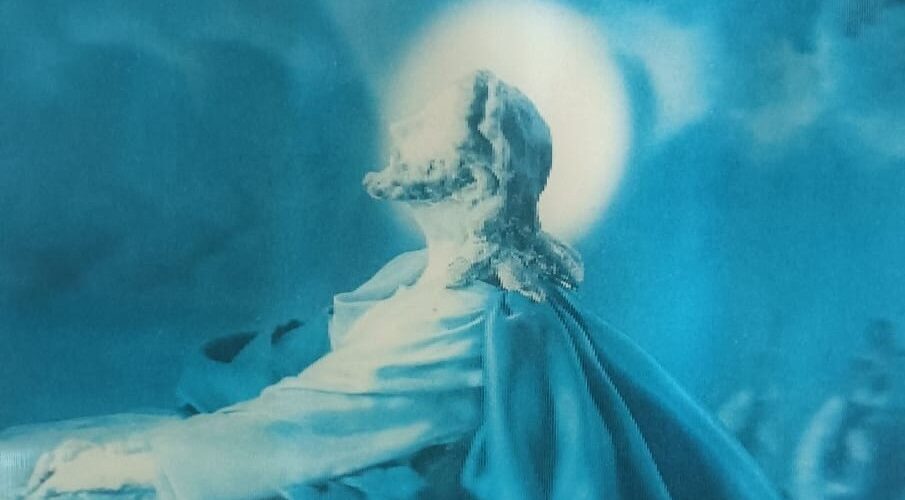
On Holy Thursday, we recall the profound love revealed in the actions of Jesus-when He washed the feet of His disciples, broke the bread, and faced His agony in the garden.
“It was just before the Passover Festival. Jesus knew that the hour had come for him to leave this world and go to the Father. Having loved his own who were in the world, he loved them to the end.” (John 13:1)
Jesus knew that He would be betrayed and abandoned, yet He knelt and showed us what it truly means to love. In the washing of the feet, He breaks down the barriers of master and servant, overturning all notions of status, power, and superiority.
“In order to let go of the pride that blocks any human being from stooping down to wash the feet of someone different from himself, Jesus had to strip off a lot of outer things—pride, moral judgment, superiority, ideology, and personal dignity—so as to wear only His inner garment.” Ronald Rolheiser
In the breaking of the bread, Jesus gives Himself to us completely. He becomes our broken bread in the Eucharist, reminding us that He is with us always.
In the garden of Gethsemane, in His anguish and surrender, He does not give in to fear or despair. Instead, He entrusts Himself fully to the Father. Jesus shows us that no matter how hopeless our situation may seem, we have a God who loves us beyond our frailty, weakness, and sin. We are not called to despair.
He came to show us the way of love-a love that casts out fear, hate, and division. His command is clear: we are to follow His example.
“I have set you an example that you should do as I have done for you.” (John 13:15)
In a world that often feels broken and disconnected, we are reminded that God works through what is broken to bring forth life.
“God uses broken things. It takes broken soil to produce a crop, broken clouds to give rain, broken grain to give bread, broken bread to give strength. It is the broken alabaster box that gives forth perfume. It is Peter, weeping bitterly, who returns to greater power than ever.” Vince Havner (evangelist and author) (SR)