
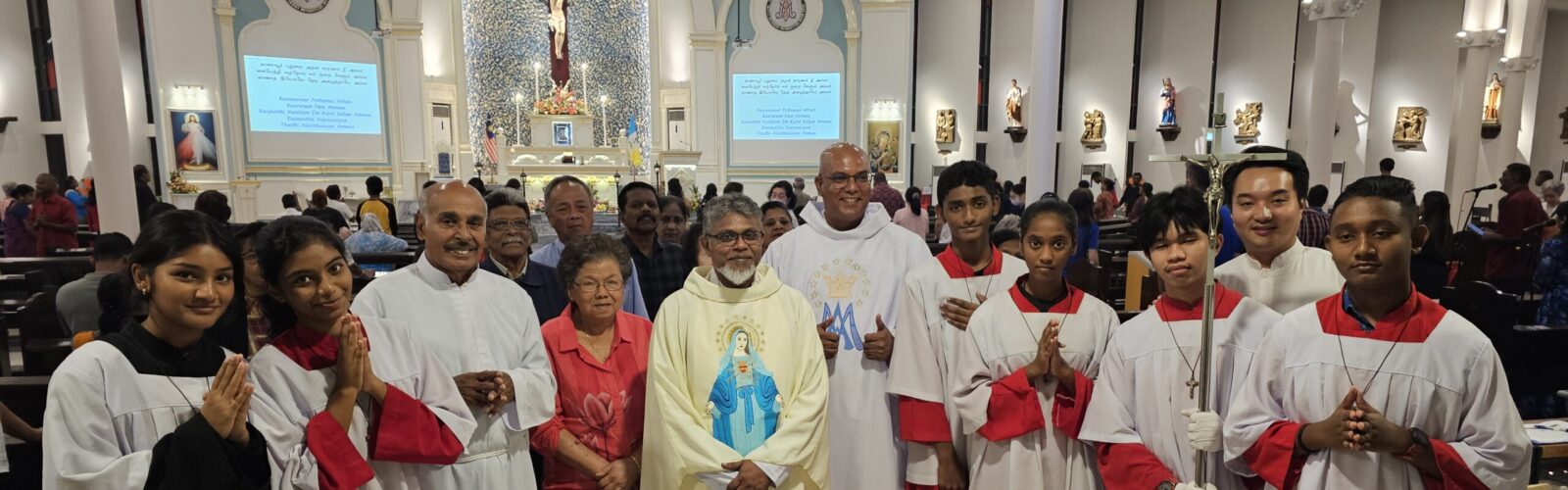
NBVM Novena Day 8: Mary, Woman of Simplicity and Stewardship
On the 8th day of the novena, with the theme Caring for God’s Creation: Mary, Model of Simplicity and Stewardship, Fr Ryan reminded us that each one of us is entrusted with the responsibility to care for the world God has made.


God’s Command: To Till and Keep
Scripture makes our duty clear. In Genesis 1:28, God commands us to “be fruitful and multiply, and fill the earth and subdue it,” and in Genesis 2:15, we are told that God placed man in the garden “to till it and keep it.” These two commands reveal a balance—humanity is called not only to use creation but also to protect it.
Everything God created has a purpose. Even creatures we may fear, such as wild boars or snakes, play a role in keeping ecosystems balanced. But when we use creation selfishly, disregarding its purpose, we cause destruction that ultimately harms us all. Natural disasters, environmental degradation, and social crises often arise from human misuse of creation.
Pope Francis, in Laudato Si’, called the Church to an “ecological conversion”—a change of heart in how we see and treat creation. To turn back to God means also to repent of the harm we have done to the earth, and to begin repairing the damage through responsible stewardship.
Mary: Model of Simplicity and Stewardship
Mary offers us a model of how to live in harmony with God’s creation. She lived a simple life, attending to the daily tasks of caring for her family. In the simplicity of her ordinary life, she found great closeness to God and was open to His mission. Because of her humility and faith, she was chosen to be the Mother of God.
Mary shows us that holiness does not come from possessing more but from living simply, gratefully, and responsibly. This disposition is demonstrated in her Magnificat, she praises God who “raises the lowly and fills the hungry with good things.” Her song is not only for humanity but for all creation—the poor, the voiceless, the vulnerable, and the earth itself.
Mary’s fiat, her “yes” to God, brought the Saviour into the world for the redemption of all creation. Our own “yes” must also extend beyond ourselves to include the care and stewardship of creation.


Gratitude: The Heart of Stewardship
A grateful heart is the beginning of responsible stewardship. When we take time to notice God’s creation, we behold its beauty and marvel at the intelligent purpose behind every living thing. From such gratitude flows a natural desire to cherish and protect creation, not exploit it; a loving response to the loving Giver.
From the beginning of time, God had each one of us in mind. When He created the trees, flowers, and birds, He created them for our delight and well-being. His gifts were never meant to be hoarded but to be shared, trusting that His providence is sufficient for all.
When we realise that creation has been given to us as a gift of love, a change of heart takes place. The only fitting response to such generosity is gratitude—praising God for His gifts and expressing that gratitude by using them responsibly and sharing them generously.
A Call to Reflection
It is easy to blame governments, neighbours, or others for the destruction of the environment. Yet the command to “till and keep” was given to each of us personally. The question remains: What am I doing?
Have I cared for creation in small, simple ways—by planting, conserving, or sharing resources? Am I living simply, as Mary did, trusting in God’s providence rather than clinging to excess? Am I returning God’s love through faithful stewardship?
True peace comes when we live as responsible stewards of God’s creation—when we care, share, and live simply in gratitude for His abundant gifts. Let us follow Mary’s example, and in our own humble ways, bring about harmony and peace in the world entrusted to us. (KA)