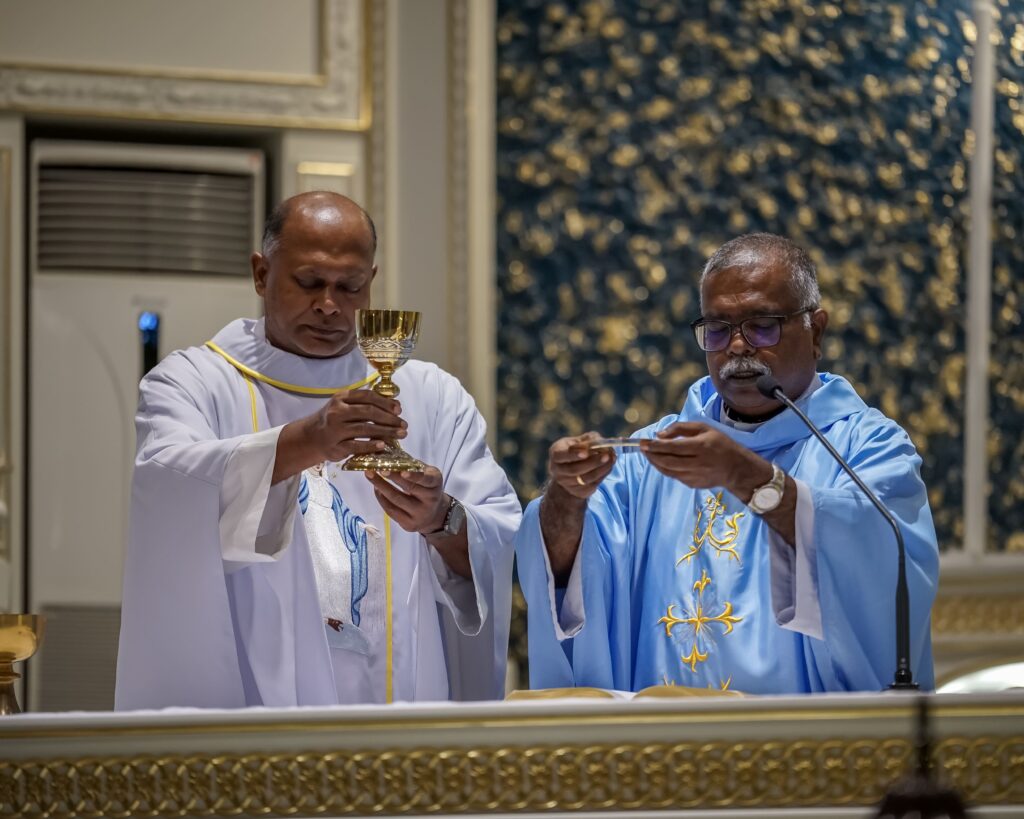

NBVM Novena Day 8: Peace Among Peoples and Nations
We pray for peace in the world. We pray for wars to end, for nations to stop fighting, for people of different races, religions and cultures to live together without hatred.
But today’s Gospel asks us to look somewhere much closer: at ourselves. Jesus speaks about the blind leading the blind, about the splinter we notice so easily in another person’s eye while failing to see the plank in our own. And in the middle of it all, He says something important: “Every disciple when fully trained will be like his teacher.”
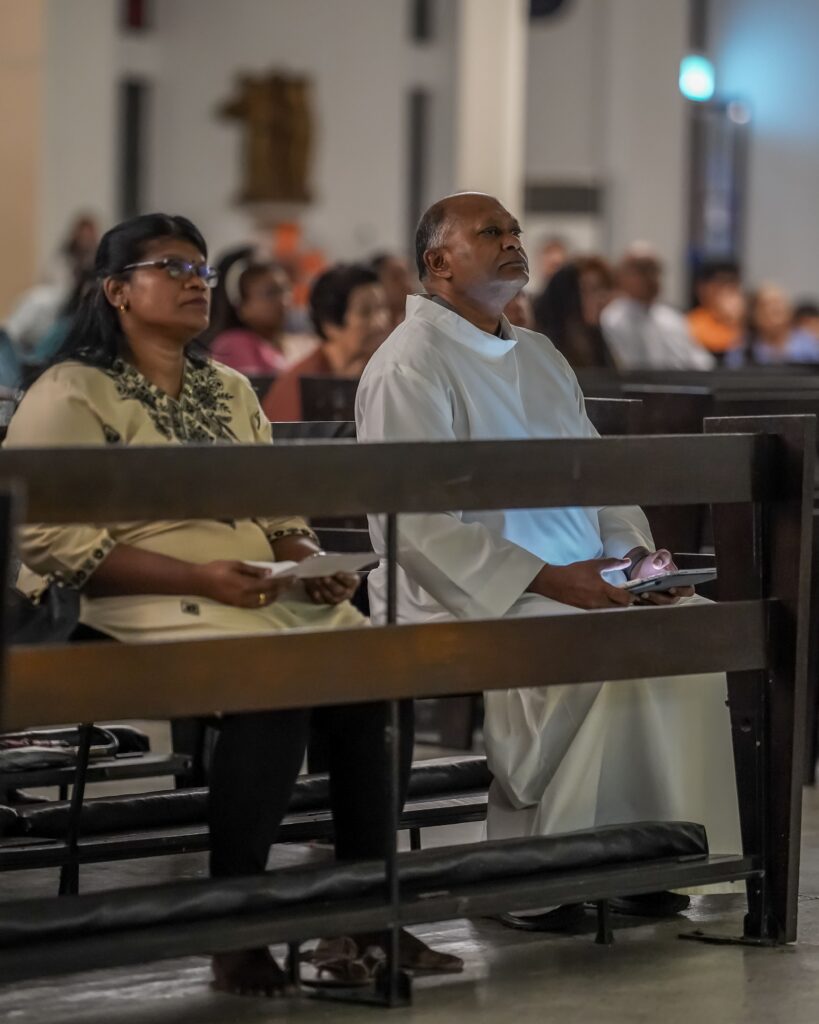
Fr Nelson reminded us that there is a difference between knowing Jesus and allowing ourselves to be trained by Jesus. Many of us have known Him for most of our lives. We have attended catechism, listened to the Gospel and heard countless homilies. We know that Jesus teaches us to forgive, to love our enemies, to show mercy and not to judge.
Knowing these things is the easy part. Living them when someone has hurt us is different.
Perhaps that is why Jesus asks us to look at the plank in our own eye first. It is so easy to see what is wrong with everyone else. We know who started the argument. We know who should apologise. We know who is being unreasonable. We know what is wrong with another race, another religion, another community, another country.
And somehow, we are always standing on the right side.
Maybe this is where our prayer for peace among peoples and nations has to become uncomfortable.
We cannot keep asking God for peace “out there” while refusing to let Him touch the places within us that are still angry, proud, judgemental or unwilling to forgive. We cannot pray for reconciliation between nations and then go home and refuse to speak to someone. We cannot ask people to overcome hatred while quietly holding onto our own resentment.
The divisions of the world may be much bigger and more complicated than our personal disagreements. But perhaps the human heart in which division takes root is not so different.
Jesus does not ask us to fix the whole world today. He asks us to let Him begin with us.
The homily brought this right into our homes. As husbands and wives, parents and children, are we becoming more like Jesus in the way we love one another? Are the people closest to us experiencing His patience, mercy and kindness through us?
That is harder than talking about world peace. Because now it is no longer about what presidents, governments or other people should do. It is about me.
Who am I still refusing to forgive? Whom have I already judged? Where am I waiting for the other person to change before I will change?
Perhaps peace among peoples and nations begins with people who are humble enough to admit that there is still a plank in their own eye, and courageous enough to bring it to Jesus.
Lord, before I ask You to change the world, begin with me. Show me what I do not want to see in myself. Train me to become more like You, so that the peace I pray for may first become visible in the way I live and love. (BV)